
Blog
Overcoming Common Issues in the Pectin Supply Chain
September 30, 2022
The world is changing, tastes are evolving, consumer preferences are shifting. Learn how you can overcome supply chain issues and ensure a steady supply of pectin for your formulations.


The world is changing, tastes are evolving, consumer preferences are shifting; this isn’t a revolutionary discovery, but it is making ripples in supply chains across the globe. The COVID-19 pandemic led to lockdowns, import and export restrictions, and labor shortages for many industries, combine these with an increased demand for a certain product and you have a recipe for disruption.
Pectin, an important gelling agent, is a staple in fruit processing, confectionery, and dairy processing. Current market demand is outpacing supply and various independent reports predict aggressive compound annual growth rates (CAGR) at 7.3% as of 2022 and will continue increasing through 2030.
Today, powdered pectin is the standard delivery method. To make this, the water is removed from the liquid pectin solution, leaving behind a solid. At this point acid levels are adjusted to allow for flexibility in functionality for the finished goods. Then the pectin is simply ground into a powder and it’s ready to be shipped off for use in various industries.
In general, pectin can be broken into two main groups: high-methoxyl (HM) and low-methoxyl (LM). The high-methoxyl category includes rapid-set and slow-set options while the low-methoxyl category is broken down into amidated and conventional grades. LM is particularly popular in the production of low or no-sugar jams and jellies.
Pectin has become a popular vegan alternative to gelatin since gelatin is derived from collagen taken from animal bones and ligaments. Pectin’s high melting temperature and ability to remain stable at room temperature also make it a quality ingredient for making gummies.
The consumer products markets are leaning heavily into clean labels and demanding natural ingredients be used in their products, so manufacturers are reformulating, and pectin has shown to be a great alternative to make this happen. Items like dairy-alternative beverages, fruit preparations, and confectionary items utilize pectin in their formulas in lieu of synthetic or animal-based ingredients sacrificing nothing on texture, taste, and quality of the original version.
Another reason for the shortage is the increasing popularity of gummies. Consumers are no longer interested in swallowing pills but would rather chew a gummy, and many companies are investing in this trend. Additionally, vegan and vegetarian diets have been a growing segment, encouraging manufacturers to incorporate plant-based ingredients into their gummies and using pectin instead of gelatin. These trends are great opportunities for business expansion, but also stress the supply and demand balance.
With labor shortages, ocean vessel shortages, and increased consumer demand, it is difficult for manufacturers to keep up.
Manufacturers and companies are turning to innovative technologies to try and work through the recession and expand their capacities. It is likely that demand will continue to outpace capacity in the coming years, putting a strain on the need for the raw materials.
Our strategic partnership with CEAMSA has been mutually beneficial during the past few years. Their capacity expansion in 2018, along with a future expansion planned for 2023, and their close relationship with their family farmers to supply raw materials have been major factors in retaining our consistent supply of pectin.
In addition, our close cooperation with customers on forecasting and local warehousing allows us to prepare for any changes in the market. We are able to plan ahead with this insight thanks to our extensive warehouse network across North America. Plus, we are optimizing our pectin portfolio for customers to avoid production shutdowns when switching between grades.
If you are interested in utilizing pectin or have any questions about the changes happening in the pectin supply chain, please reach out to us and we would be happy to share our industry insights.
Pectin, an important gelling agent, is a staple in fruit processing, confectionery, and dairy processing. Current market demand is outpacing supply and various independent reports predict aggressive compound annual growth rates (CAGR) at 7.3% as of 2022 and will continue increasing through 2030.
What is Pectin
Pectin is manufactured from the peels of citrus fruits and used as a gelling agent in products such as gummies and jellies. Earliest indications on the launch of today’s manufacturing dates back to in the late 1800s when fruit juice producers in Germany saw an opportunity to profit off the scraps coming from the fruit. They took the pomace residue and dried it out to later be sold to jam makers who would then cook that pomace in water to create a jellying juice, creating the first liquid pectin. Douglas Pectin, the ingredient’s namesake, quickly patented the product and production method.Today, powdered pectin is the standard delivery method. To make this, the water is removed from the liquid pectin solution, leaving behind a solid. At this point acid levels are adjusted to allow for flexibility in functionality for the finished goods. Then the pectin is simply ground into a powder and it’s ready to be shipped off for use in various industries.
In general, pectin can be broken into two main groups: high-methoxyl (HM) and low-methoxyl (LM). The high-methoxyl category includes rapid-set and slow-set options while the low-methoxyl category is broken down into amidated and conventional grades. LM is particularly popular in the production of low or no-sugar jams and jellies.
Pectin has become a popular vegan alternative to gelatin since gelatin is derived from collagen taken from animal bones and ligaments. Pectin’s high melting temperature and ability to remain stable at room temperature also make it a quality ingredient for making gummies.
Why is There a Shortage of Pectin
The pandemic has put strains on supply chains across the globe, primarily due to restrictions on international trade. Pectin is one of these products that is feeling these effects. A critical ingredient in manufacturing products in the food, beverage, and healthcare industries; pectin shortages have led to increased prices and disrupted production cycles for manufacturers. But COVID lockdowns and other pandemic related disruptions are not the only reason for the shortage.The consumer products markets are leaning heavily into clean labels and demanding natural ingredients be used in their products, so manufacturers are reformulating, and pectin has shown to be a great alternative to make this happen. Items like dairy-alternative beverages, fruit preparations, and confectionary items utilize pectin in their formulas in lieu of synthetic or animal-based ingredients sacrificing nothing on texture, taste, and quality of the original version.
Another reason for the shortage is the increasing popularity of gummies. Consumers are no longer interested in swallowing pills but would rather chew a gummy, and many companies are investing in this trend. Additionally, vegan and vegetarian diets have been a growing segment, encouraging manufacturers to incorporate plant-based ingredients into their gummies and using pectin instead of gelatin. These trends are great opportunities for business expansion, but also stress the supply and demand balance.
With labor shortages, ocean vessel shortages, and increased consumer demand, it is difficult for manufacturers to keep up.
Analyzing the Market
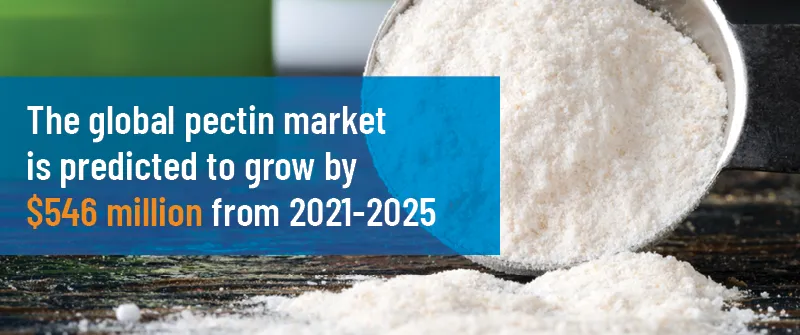
Though the pandemic has had a significant impact on the pectin market, reports are optimistic for the future. From 2021-2025, it is predicted that the market will grow by $546 million.Manufacturers and companies are turning to innovative technologies to try and work through the recession and expand their capacities. It is likely that demand will continue to outpace capacity in the coming years, putting a strain on the need for the raw materials.
What We are Doing
At Palmer Holland, we work closely with our commercial partner, CEAMSA, to provide the market with high quality pectin from their manufacturing facility in Porrino, Spain. CEAMPECTIN® from CEAMSA offers optimal functionality and process ability in a litany of applications and industry segments, and our close partnership and forward-thinking have helped us avoid supply disruptions.Our strategic partnership with CEAMSA has been mutually beneficial during the past few years. Their capacity expansion in 2018, along with a future expansion planned for 2023, and their close relationship with their family farmers to supply raw materials have been major factors in retaining our consistent supply of pectin.
In addition, our close cooperation with customers on forecasting and local warehousing allows us to prepare for any changes in the market. We are able to plan ahead with this insight thanks to our extensive warehouse network across North America. Plus, we are optimizing our pectin portfolio for customers to avoid production shutdowns when switching between grades.
If you are interested in utilizing pectin or have any questions about the changes happening in the pectin supply chain, please reach out to us and we would be happy to share our industry insights.