
News
US EPA: Ongoing Chemical Risk Evaluations Under TSCA
May 30, 2024
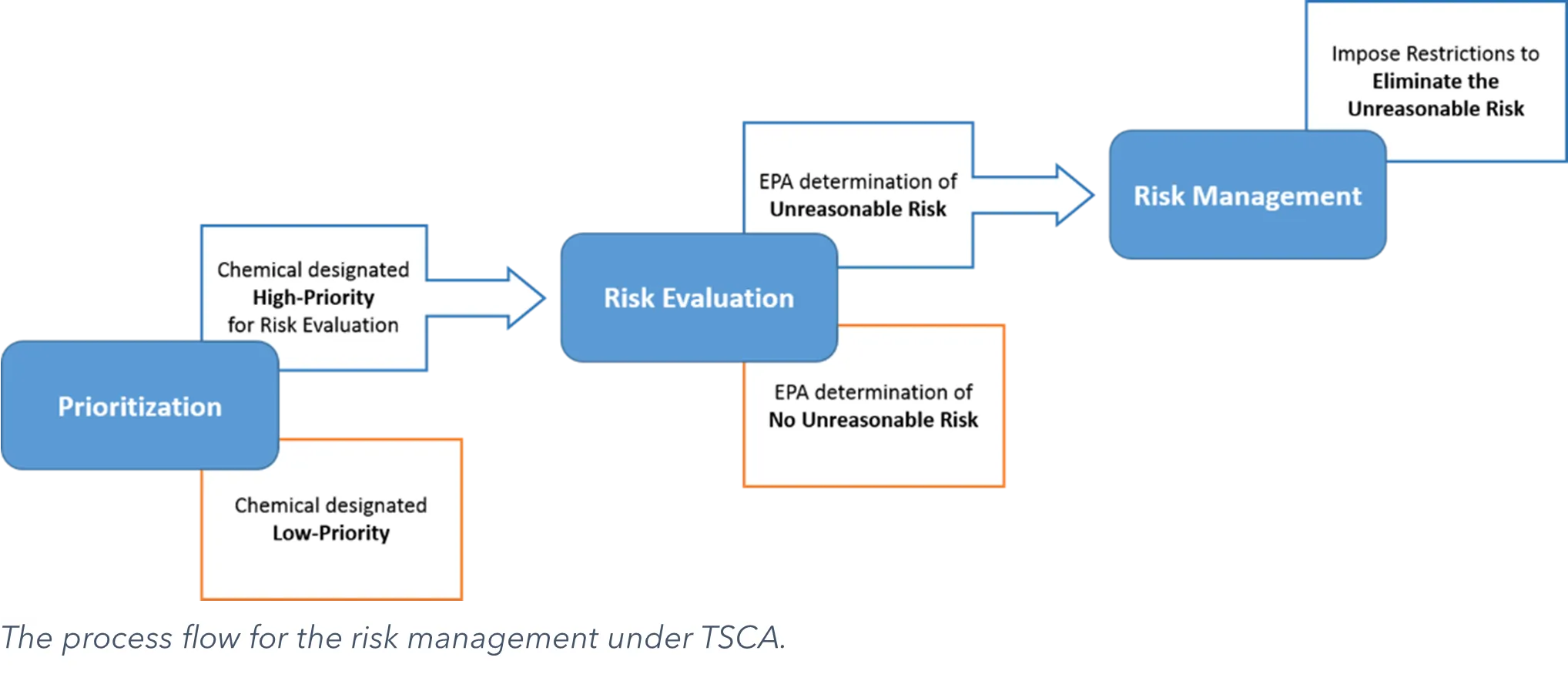
Chemicals in various stages of the risk evaluation/management process under TSCA are listed below. Since the TSCA was amended in 2016, nearly every risk evaluation has resulted in incredibly restrictive proposals or complete bans.


Chemicals in various stages of the risk evaluation/management process under TSCA are listed below. Since the TSCA was amended in 2016, nearly every risk evaluation has resulted in incredibly restrictive proposals or complete bans. Most recently, the first finalized ban under the TSCA was announced on March 18th for asbestos.
.png?language=en "Picture1-(1).png")
The prioritized list of substances for risk evaluation was announced on December 14, 2023. The evaluations will take approximately 3-3½ years to complete. A ban on TCE was proposed in October 2023, but has not been finalized yet. Both topics were discussed in depth in Issue #1 of the PH Regulatory Newsletter located on Palmer Holland’s website.
Prioritized for Risk Evaluation
|
Proposed Risk Management Phase
|
Final Risk Management Phase
|
The prioritized list of substances for risk evaluation was announced on December 14, 2023. The evaluations will take approximately 3-3½ years to complete. A ban on TCE was proposed in October 2023, but has not been finalized yet. Both topics were discussed in depth in Issue #1 of the PH Regulatory Newsletter located on Palmer Holland’s website.
- Perchloroethylene – In June 2023, the US EPA proposed a ban on all consumer and many commercial uses. The ban would also include stricter workplace protections and recordkeeping for importers, processors, and distributors.
- Asbestos Part 1: Chrysotile – On March 18, 2023, the US EPA finalized a rule to prohibit ongoing uses of chrysotile asbestos. This ruling marks a milestone as the first rule to be finalized under the new TSCA risk management process. It has already been banned in 50 countries, and other variations of asbestos fibers will be evaluated this year. The final risk evaluation for other fibers is expected to be completed by December 1, 2024.
- Methylene chloride (DCM) – In October 2022, this volatile organic compound (VOC) received an unreasonable risk assessment after risk evaluation. On May 3, 2023, the US EPA issued a proposed rule that would prohibit the manufacture (including import), processing, and distribution in commerce of methylene chloride for all consumer uses; prohibit most industrial and commercial uses of DCM; Create strict workplace protections for the remaining uses; require notification of these prohibitions throughout the supply chain; and require recordkeeping. Most of these changes would be fully implemented in 15 months after the rule is finalized.
- N-methylpyrrolidone (NMP) – In December 2022, the US EPA determined that NMP presents an unreasonable risk of injury to human health under its current conditions of use. They have initiated rulemaking under TSCA to address these risks, but a proposed rule has not yet been published. NMP is used for solvent cleaning and surface treatment of metals, textiles, resins, and plastics.
- 1,4-dioxane – After the initial risk evaluation was completed in December 2020, 1,4-dioxane received an unreasonable risk determination. A revised risk evaluation was conducted, and another draft was published in July 2023. Preliminary findings from this evaluation included risks associated with water discharge contamination. Due to the revised risk evaluation, a risk management proposal has not been published yet. The EPA has 1 year to propose risk management actions.
- Formaldehyde – On March, 15 2024, the EPA released a draft of the risk evaluation for peer review by the Science Advisory Committee on Chemicals (SACC) and take place May 20-23, 2024. The risk evaluation of formaldehyde has been ongoing since 2019 due to the variety of uses, which has caused it to be complicated and extensive. After peer review, the draft will move through the risk evaluation process allowing for public comments on the draft evaluation before a proposal is submitted.
- Phenol, isopropylated phosphate (3:1) (PIP(3:1)) & Decabromodiphenyl ether (decaBDE) – These 2 substances represent 2 of the 5 persistent, bioaccumulative, and toxic (PBT) chemicals addressed in final rule issued under the TSCA 6(h) in January 2021. Further restrictions are being proposed for PIP(3:1) and decaBDE to restrict water releases and implement stricter workplace protections. On November 24, 2023, the US EPA issued a proposed rule that revises the risk management of these 2 PBT chemicals.
- 1-Bromopropane – In December 2022, the US EPA determined that 1-bromopropane presents an unreasonable risk of injury to human health under its conditions of use. They have initiated rulemaking under TSCA to address these risks, but a proposed rule has not yet been published.
- C.I. Pigment Violet 29 (PV29) – In August 2022, the US EPA determined that PV29 presents an unreasonable risk of injury to human health under its conditions of use. They have initiated rulemaking for risk management action under TSCA, but a proposed rule has not yet been published.
- Cyclic Aliphatic bromide cluster (HBCD) – In June 2022, the US EPA determined that HBCD presents an unreasonable risk of injury to human health under its conditions of use. They have initiated rulemaking for risk management action under TSCA, but a proposed risk management rule has not yet been published.